Sumon Biswas
Sumon Biswas
Home
Publication
Service
Teaching
Students
News
Talks
Blogs
reSAID Lab
Light
Dark
Automatic
Conference
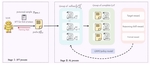
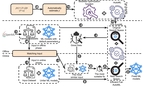
ReShift: Aha-Moment-Driven Reasoning-Level Backdoor Attacks on Vision–Language Models
We propose ReShift, the first aha-moment-driven reasoning-level backdoor framework for Vision–Language Models that redirects chain-of-thought trajectories while preserving surface-level coherence.
Zhihao Dou
,
Qinjian Zhao
,
Zhiqiang Gao
,
Sumon Biswas
Cite
ArXiv
What Breaks When LLMs Code? Characterizing Operational Safety Failures of Agentic Code Assistants
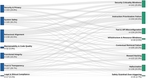
An empirical study of 547 real-world operational safety failures in LLM-based coding agents, revealing a taxonomy of 33 risk types and showing that over 65% of incidents arise during routine bug fixing and configuration tasks.
Alif Al Hasan
,
Sumon Biswas
Cite
ArXiv
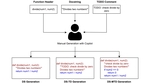
ReqGenX: An Empirical Study of Atomic Decomposition, Artifact Regeneration, and Reconstruction for Legacy SRS Documents
An empirical study of transforming legacy SRS documents into traceable synthetic pre-SRS artifacts for fine-grained evaluation of LLM-based requirements specification generation.
Ragib Shahariar Ayon
,
Rayed Fahmi
,
Sumon Biswas
,
Shibbir Ahmed
Cite
ArXiv
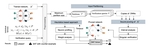
Plan Then Action: High-Level Planning Guidance Reinforcement Learning for LLM Reasoning
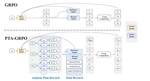
We propose PTA-GRPO, a two-stage framework that improves LLM reasoning by combining high-level planning guidance with guidance-aware reinforcement learning.
Zhihao Dou
,
Qinjian Zhao
,
Zhongwei Wan
,
Dinggen Zhang
,
Weida Wang
,
Towsif Raiyan
,
Benteng Chen
,
Qingtao Pan
,
Yang Ouyang
,
Chaoda Song
,
Zhiqiang Gao
,
Shufei Zhang
,
Sumon Biswas
Cite
ArXiv
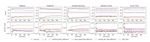
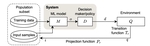
FairSense: Long-Term Fairness Analysis of ML-Enabled Systems
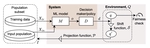
We propose a simulation-based framework called FairSense to detect and analyze long-term unfairness in ML-enabled systems.
Yining She
,
Sumon Biswas
,
Christian Kästner
,
Eunsuk Kang
Cite
DOI
Are Prompt Engineering and TODO Comments Friends or Foes? An Evaluation on GitHub Copilot
We show that GitHub Copilot can generate code with the symptoms of SATD, both prompted and unprompted. Moreover, we demonstrate the tool’s ability to automatically repay SATD under different circumstances and qualitatively investigate the characteristics of successful and unsuccessful comments.
David OBrien
,
Sumon Biswas
,
Sayem Imtiaz
,
Rabe Abdalkareem
,
Emad Shihab
,
Hridesh Rajan
Cite
DOI
Fairify: Fairness Verification of Neural Networks
We proposed Fairify, an approach to make individual fairness verification tractable for the developers. The key idea is that many neurons in the NN always remain inactive when a smaller part of the input domain is considered. So, Fairify leverages white-box access to the models in production and then apply formal analysis based pruning.
Sumon Biswas
,
Hridesh Rajan
Cite
DOI
Towards Understanding Fairness and its Composition in Ensemble Machine Learning
We comprehensively study popular real-world ensembles: bagging, boosting, stacking and voting. We have developed a benchmark of 168 ensemble models collected from Kaggle on four popular fairness datasets. We use existing fairness metrics to understand the composition of fairness. Our results show that ensembles can be designed to be fairer without using mitigation techniques. We also identify the interplay between fairness composition and data characteristics to guide fair ensemble design.
Usman Gohar
,
Sumon Biswas
,
Hridesh Rajan
Cite
DOI
Fix Fairness, Don't Ruin Accuracy: Performance Aware Fairness Repair using AutoML
Our approach includes two key innovations: a novel optimization function and a fairness-aware search space. By improving the default optimization function of AutoML and incorporating fairness objectives, we are able to mitigate bias with little to no loss of accuracy. Additionally, we propose a fairness-aware search space pruning method for AutoML to reduce computational cost and repair time.
Giang Nguyen
,
Sumon Biswas
,
Hridesh Rajan
Cite
DOI
Towards Safe ML-Based Systems in Presence of Feedback Loops
We highlight the safety risks posed by feedback loops in ML-based systems, discuss why they are hard to detect with current software engineering methods, and propose research directions to better identify, monitor, and mitigate these effects.
Sumon Biswas
,
Yining She
,
Eunsuk Kang
Cite
DOI
»
Cite
×